What Is Ideology? What Is Punk Ideology?
Ideology can be defined as a set of beliefs, values and ideas that usually refer to a political social and cultural system. A few examples of Ideology are communism, capitalism, and socialism. These are all different sets of beliefs on how a society should function.
Punk Ideology varies significantly on a wide spectrum, but the ideology I'll be focusing on consists of particular themes such as anti- establishment, individualism, non-conformity, and DIY ethics. The punk subculture is mostly known for its anarchist beliefs, but it's also well known for its political and social activism. The Sex Pistols in the 70's were largely renowned for their anti-establishment and politically based music, further influencing political activism within the punk subculture. This influence continued into the 80's, well into the 90's.
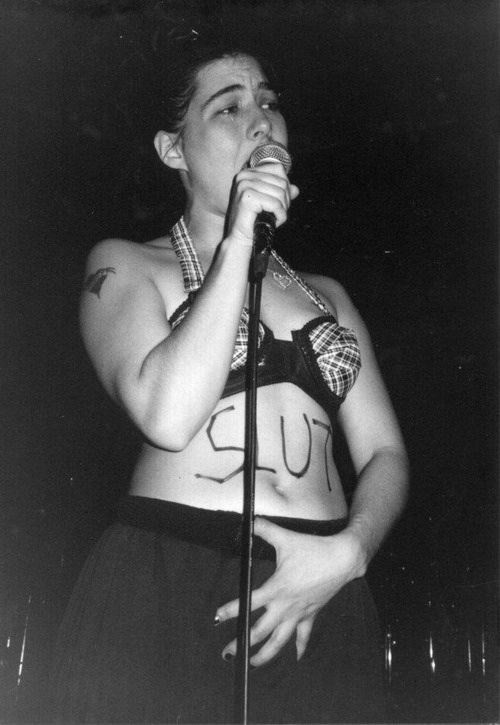 |
| Kathleen Hanna, Bikini Kill Riot Grrrl was an underground feminist punk movement that started in the early 90s. |
Anti- Establishment
Anti- Establishment ideas were often expressed through music and lyrics, provocative fashion, and political movements. Bands like The Crass who promoted anarchist (against the establishment) ideas through their music would actively challenge authority and government. Many acquainted with the punk subculture experienced class inequality and oppressive themes dealt by society, leading to anger and frustration with the established authority. This ideology influenced multiple political movements, such as the feminist movement in the 90s which advocated against the patriarchy, the Ronald Reagan protests in the 80’s, and the rock against racism movement in 1976.
 |
| The Ramones, 1970s |
Individualism
Non-Conformity
The non-conformist ideology ties into individualism and the DIY ethos. As I said in the intro, punk was inherently against everything mainstream. There was a growing anger with an overly commercialized culture. The music industry had become a corporate dominated scene where music artists had to conform to industry standards, which gave rise to the erratic and fast paced music created by punks as a reaction to the corporate music that was so popular. Commercialized beauty standards that encouraged perfection provoked a fashion movement that aimed to shock and disrupt the established beauty and fashion looks that were regarded as conventional.
DIY Ethos
 |
| Two punks, 1980s |


Comments
Post a Comment